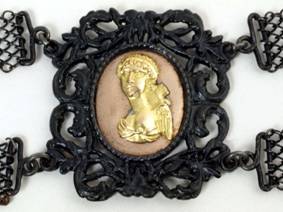
Necklace
Komárov(?), Bohemia, around 1830
Blued cast iron, gilt copper medallions.
L: 48 cm
UMP 16042
The creation of cast-iron jewellery represented the pinnacle of art casting in iron. Production of cast-iron jewellery was connected with the Napoleonic Wars of the early 19th century, when wearing the jewellery was a symbol of Prussian patriotism (replacing gold with iron was essential to finance the battles against Napoleon). Cast iron jewellery was popular throughout the first half of the 19th century. The Royal
Prussian Iron Foundry in Berlin was particularly renowned for its production. However, jewellery was also produced in other foundries in Europe, including the Prussian Iron Works in Gleiwitz (today’s Gliwice in Upper Silesia) and Komárov ironworks, where jewellery was also produced in cooperation with Prague jeweller Johann Richter.
The necklace in the Pilsen collection dates from this period, when subjects from antiquity were also popular. The technique for producing individual pieces was essentially identical to that for precious metal jewellery (lost-wax casting). Because corrosion is one of the negative aspects of iron, the surface was treated using black oxide or (linseed oil) varnish. (JMl).